
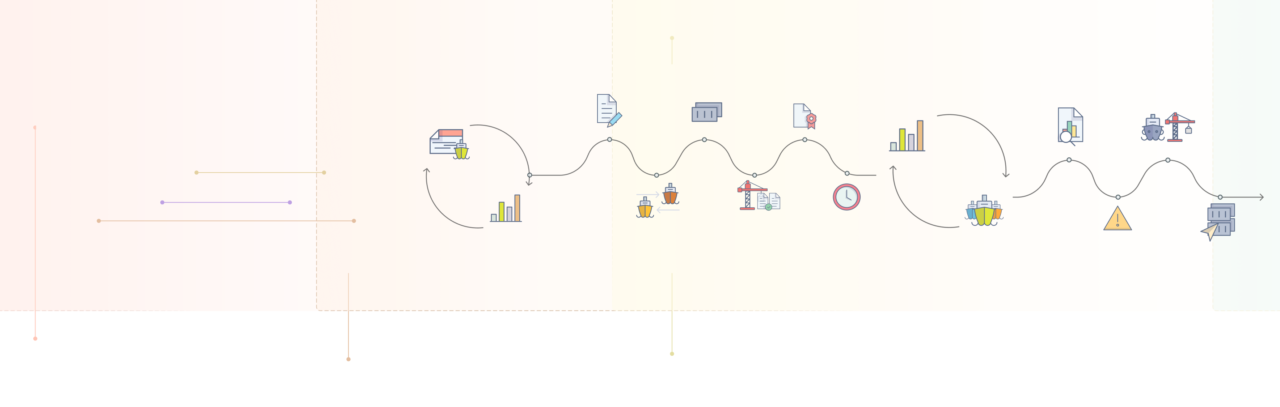
End-to-End
Ocean Logistics
Product strategy-
EMPLOYER
Maersk
ROLE
Cross-platform Experience Designer
Maersk developed many tools to run its ocean operations, but complexity, legacy systems, dispersed data and local initiatives left the product landscape fragmented.
The goal was a unified service view that connected products to outcomes, revealed gaps and guided new initiatives, creating a stronger foundation for the end-to-end product experience.
Background
Maersk’s operations span the full chain, from network planning and vessel scheduling to last-mile delivery and customer-facing products. Each area carries its own users, goals and initiatives, and without a shared view, these efforts often moved independently, making alignment difficult.
My mandate was to map the service with stakeholders, connect it to key business metrics, surface the real problems and opportunities and stress-test new initiatives.
Discovery
Collecting process and service data
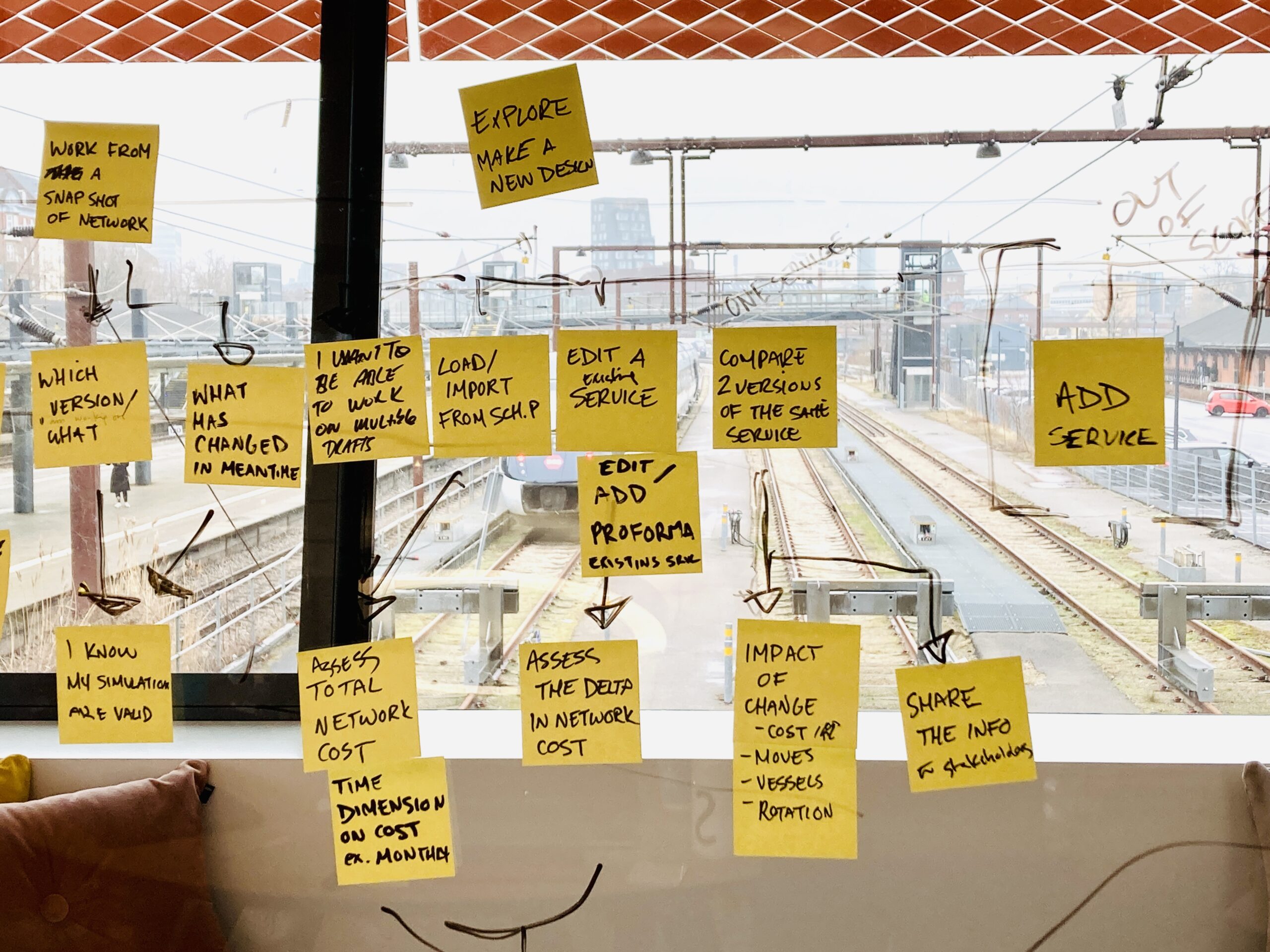
To establish a foundational understanding, I aggregated service maps, experience flows and process diagrams from across teams. These ranged from network planning (vessel services, route schedules, cargo flow) all the way to warehouse delivery. These created the spine of the service blueprint.


Aligning business intelligence
Working closely with the BI team, we overlaid key commercial objectives, such as delivery promise, booking metrics, and cargo dwell time, onto the operational maps. This linkage enabled us to visualise how service experiences directly impacted business KPIs.


Product strategy enablement
A strategic modelling artefact
The mapped data and commercial overlays allowed us to use the service map as a strategic model for testing new ideas. Teams could “game” initiatives by visualising their dependencies, identifying conflicts with legacy systems or parallel projects and understanding where new concepts would land within the broader product landscape. By outlining the problems, solutions and users across upcoming initiatives before mapping them, the organisation gained clarity on overlaps, sequencing and priorities—making hidden dependencies visible early.


Enhancing collaboration & Onboarding
The service map became a foundation for designing experiences across the entire product landscape. It provided teams with a clear view of how shipping services, internal tools and commercial goals interconnect, helping designers and product managers assess opportunities beyond a single feature or workflow. It also accelerated onboarding, giving new team members an immediate understanding of Maersk’s operational setup, decision flows and product relationships.

